Our work / water heater installation
Replacing a 7-year-old water heater in a Sanger garage
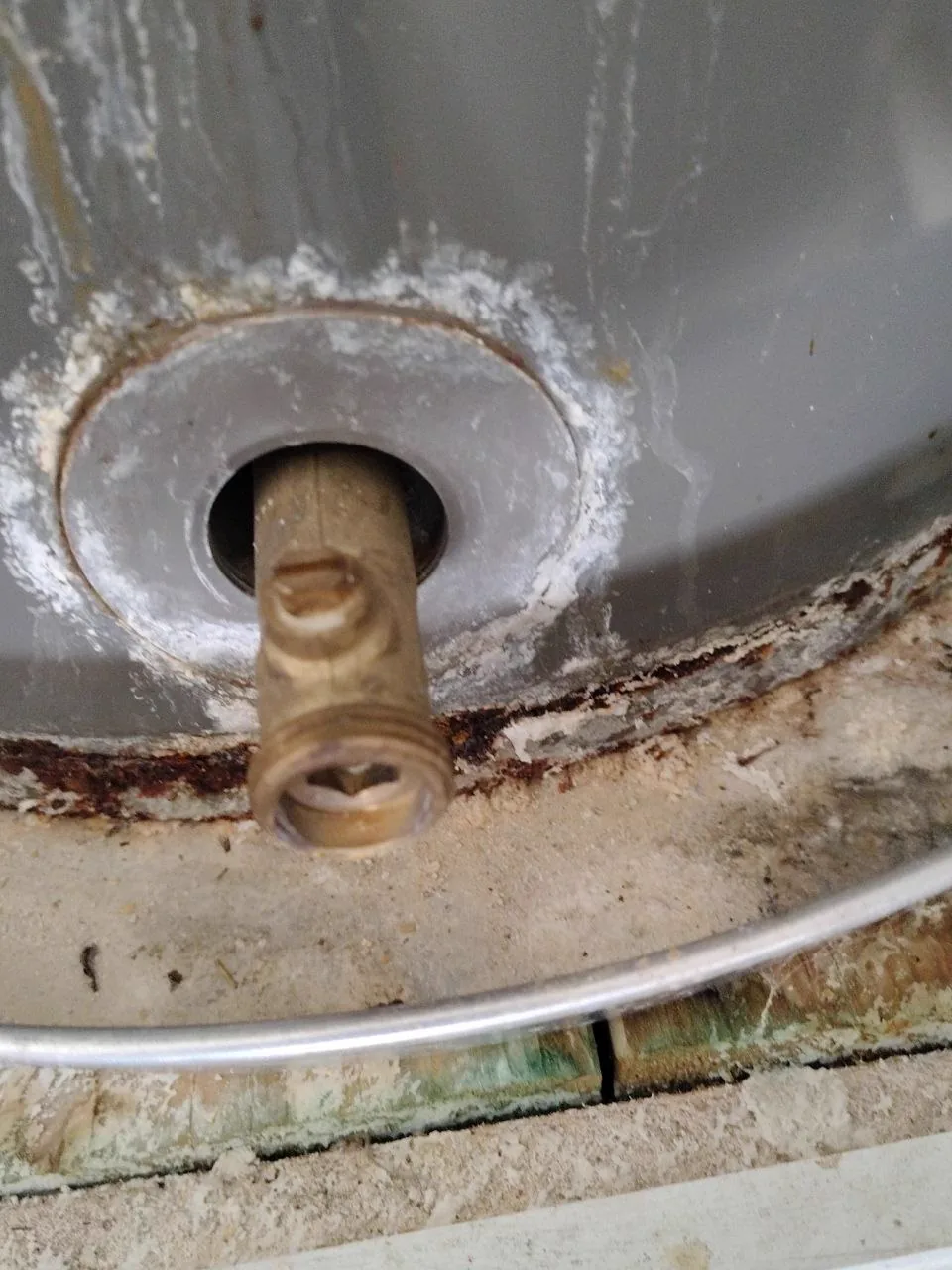
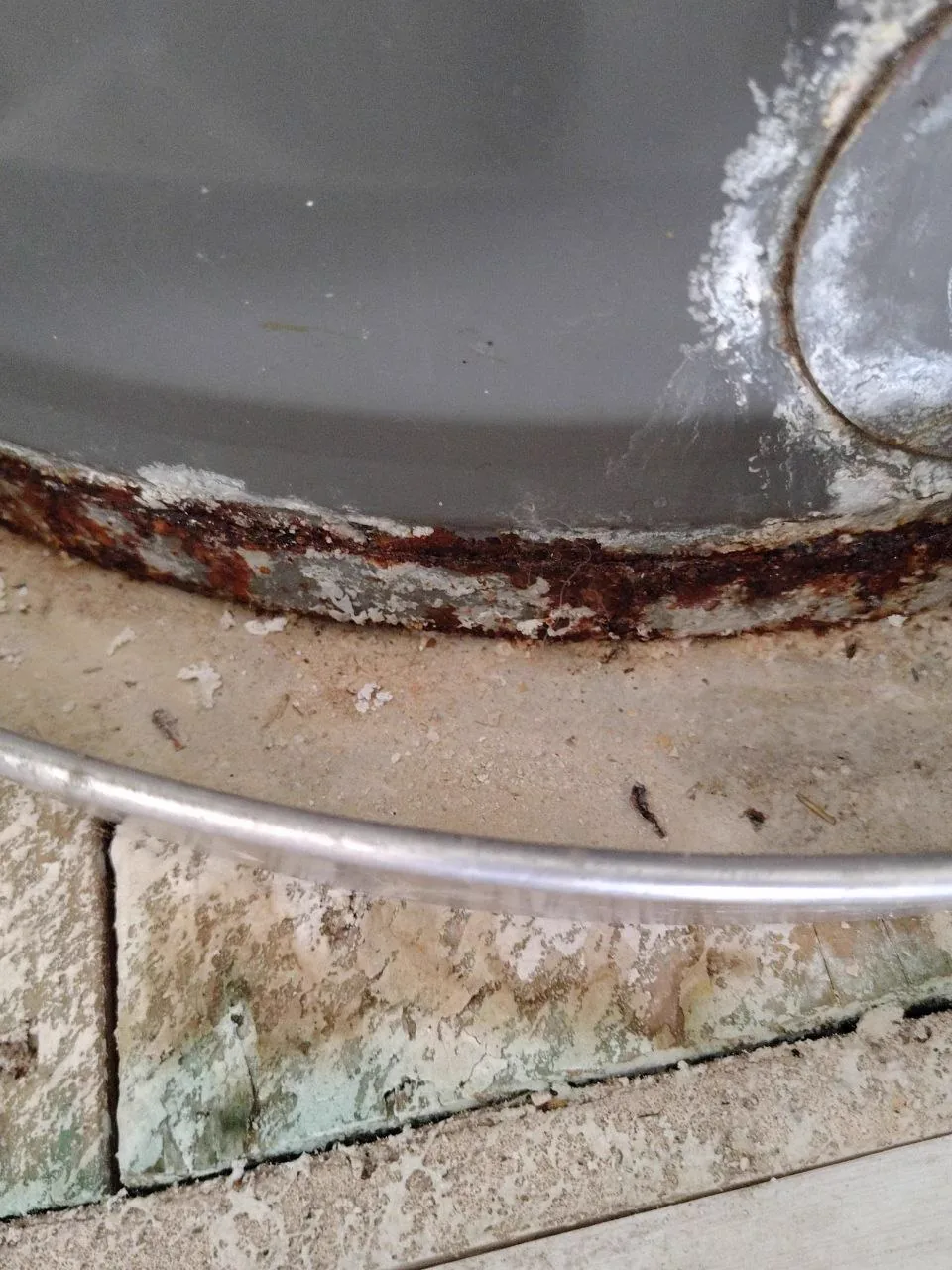
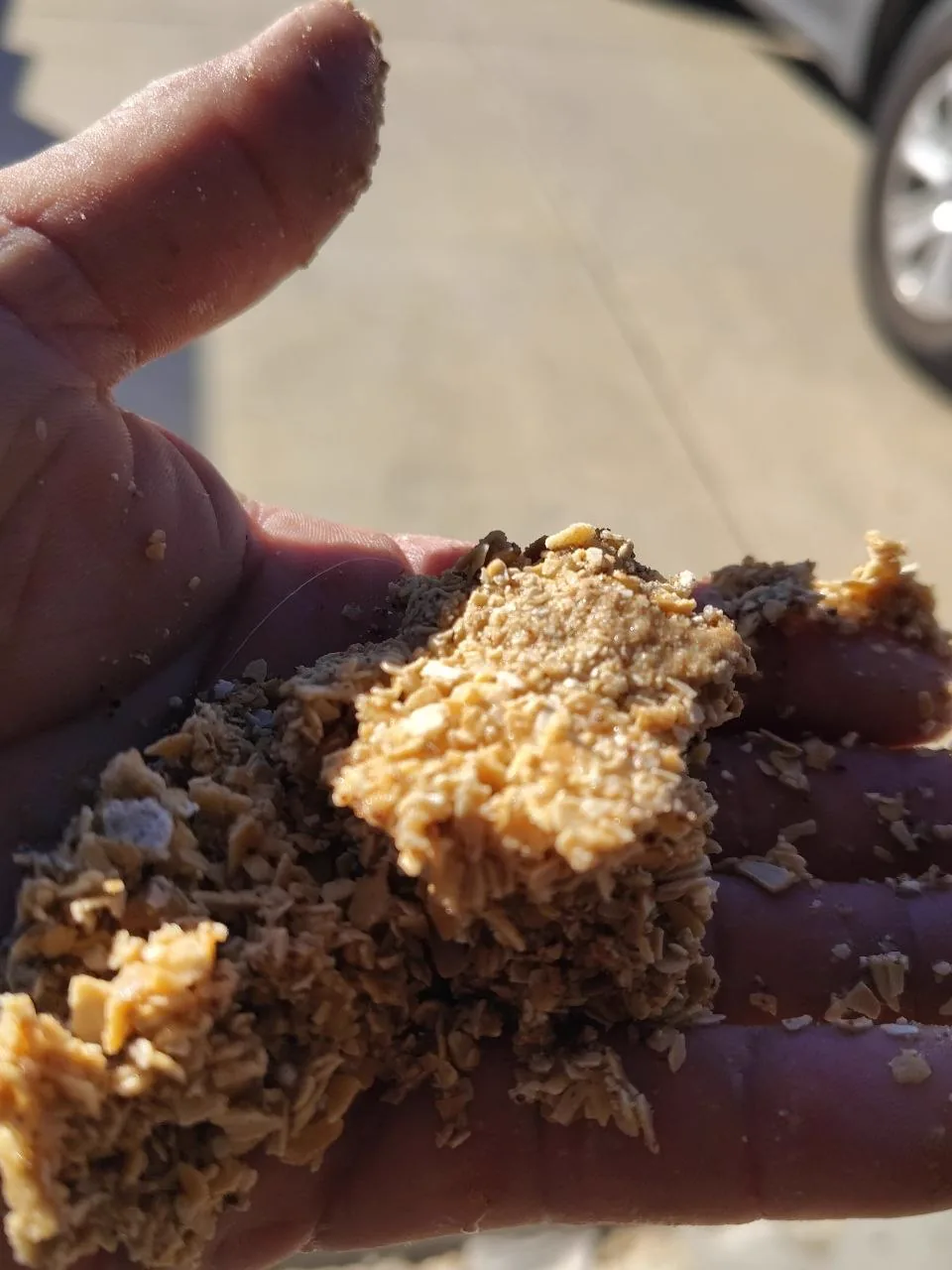
The homeowner's hot water had stopped completely. The 7-year-old electric tank sat in an unconditioned garage, with heavy corrosion and flaking rust along its base, mineral crust around the drain valve and lower fittings, and a thick layer of sediment inside. We flushed and took the old unit apart, confirmed the damage, and replaced the water heater.
What was happening
The homeowner called because the hot water had stopped completely. The water heater was an electric tank, only 7 years old, sitting in an unconditioned garage in Sanger.
What we found
The outside of the tank told most of the story. Heavy mineral crust and scale had built up around the drain valve and the lower fittings, and active, flaking rust was eating into the steel shell along the base. Years of humid air, trapped summer heat and cold winter drafts had worn the lower part of the tank hard.
The inside told the rest. When we flushed and took the old unit apart, a thick layer of sediment and scale came out of the bottom of the tank. On an electric water heater, that buildup sits right where the lower heating element works, and it makes the heater work harder until something gives. Here, the heater quit heating altogether.
The fix
With the tank corroded at its base and no longer heating, repairing a part would not have been worth it. We replaced the water heater.
How to keep it from happening
- Flush the tank every year, or have it flushed, before sediment hardens.
- Insulate the pipes, and the tank with a blanket rated for your model, if it sits in an unconditioned garage.
- Have the anode rod checked, since it corrodes so the tank does not.
- Watch for pooling water, rust streaks around fittings, and popping or rumbling from the tank, and call before a small problem becomes a dead water heater.
Read more on why North Texas garages are hard on water heaters, or see water heater installation.