plumbing
Why a 7-Year-Old Water Heater Quit in a Sanger, TX Garage
Published by Lantern Home Services
Short answer
A 7-year-old electric tank in an unconditioned Sanger garage had stopped making hot water. It had heavy sediment inside, mineral crust at the drain valve and rust on the base, so we replaced it. To help a garage water heater last, Rheem recommends flushing once a year (every 6 months with hard water) and checking the anode rod yearly. Insulate the pipes and watch for rust, leaks and rumbling.
If you live in North Texas, you already know our weather loves to keep us on our toes. From blistering, 100-degree afternoons in July and August to sudden, freezing ice storms in January, our climate is tough on outdoor gear and vehicles. It may be toughest of all on the appliances tucked away in our unconditioned garages.
We recently replaced an electric water heater in a garage in Sanger, TX, and it is a textbook example of what happens when a harsh garage and skipped maintenance collide. Here is what we found, why garages are hard on water heaters, and the simple steps that help yours last longer.
The Culprit: Extreme Weather Meets Silent Sediment
The water heater we replaced was only 7 years old. That is on the early end of the 6 to 12 years that InterNACHI, an association of home inspectors, lists for a conventional water heater. Sitting out in an unconditioned garage in Sanger, it had taken years of North Texas heat, cold and humidity.
The homeowner called because the hot water had stopped completely. When we went to investigate, we found a system choked by heavy corrosion outside and heavy buildup inside.
- The exterior damage. Years of humid air, trapped summer heat and cold winter drafts had badly worn the lower part of the tank.
- The drain valve. Heavy mineral crust and scale had formed right around the drain valve and the lower fittings, as you can see below.
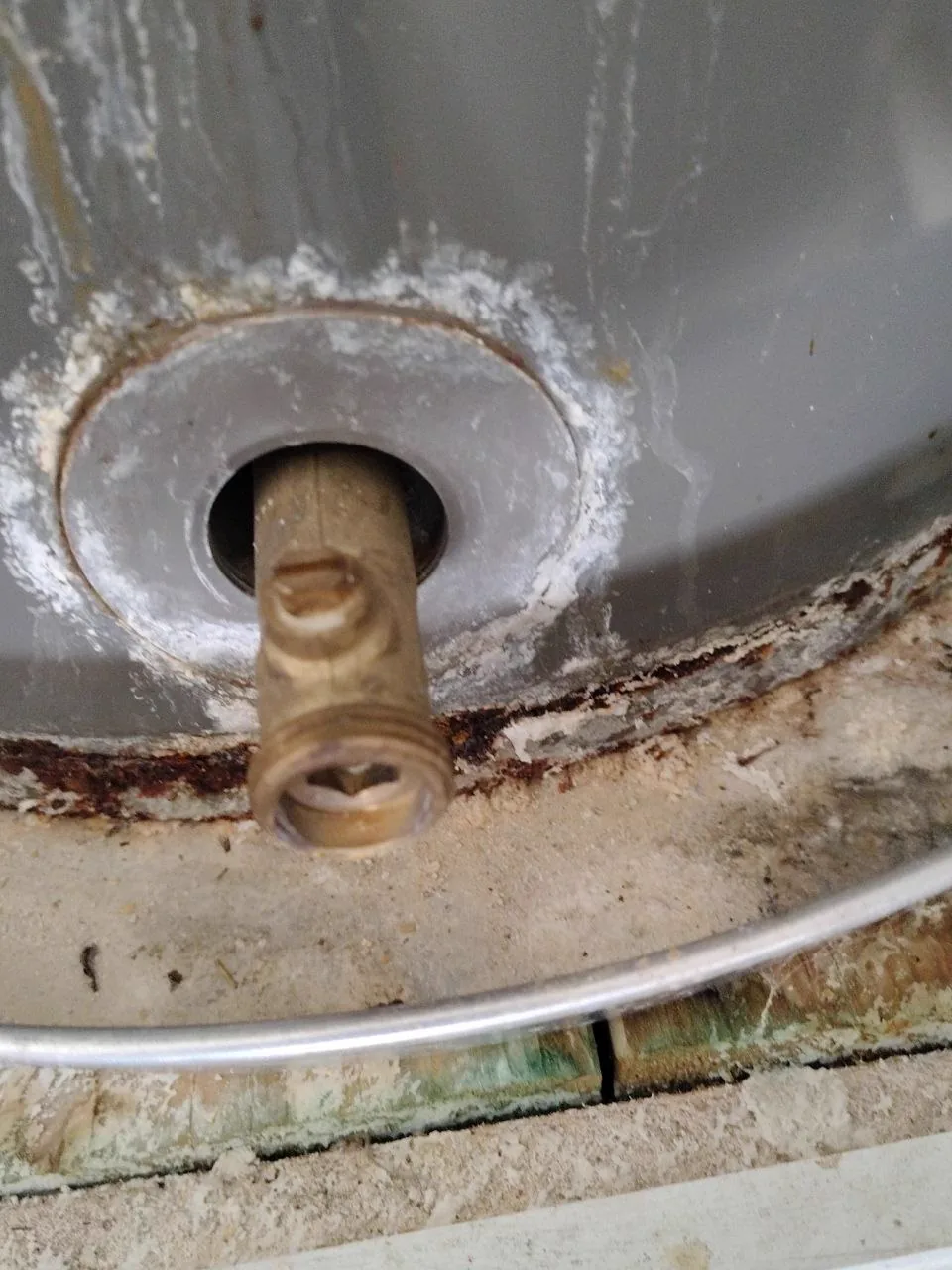
Mineral crust at the drain valve. White, chalky scale ringed the brass drain valve at the bottom of the tank, with rust starting along the base below it. Crust like this deserves a closer look on any water heater, because it can mean water has been seeping out and drying.
A closer look at the base showed active, flaking rust eating into the steel tank shell. That is the kind of damage moisture, condensation and years of wear inside a garage leave behind.
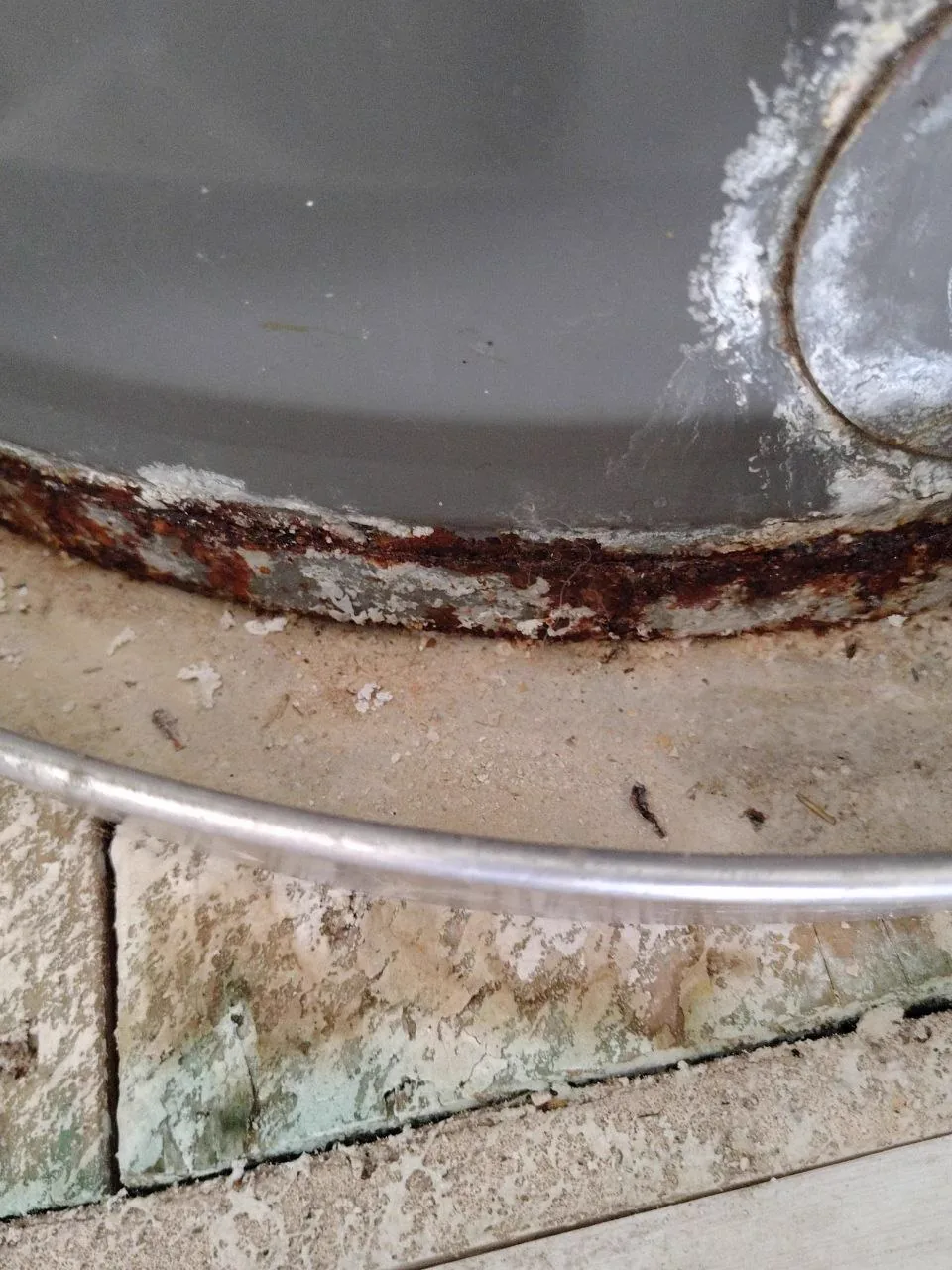
Rust along the base. The bottom edge of the tank was rusting through its finish, with flakes collecting on the floor around it. Once the steel at the base starts to go, it does not stop on its own.
Inside the Tank: A Handful of Trouble
The real smoking gun was inside. When we flushed and took the system apart, this is what came out of the tank.
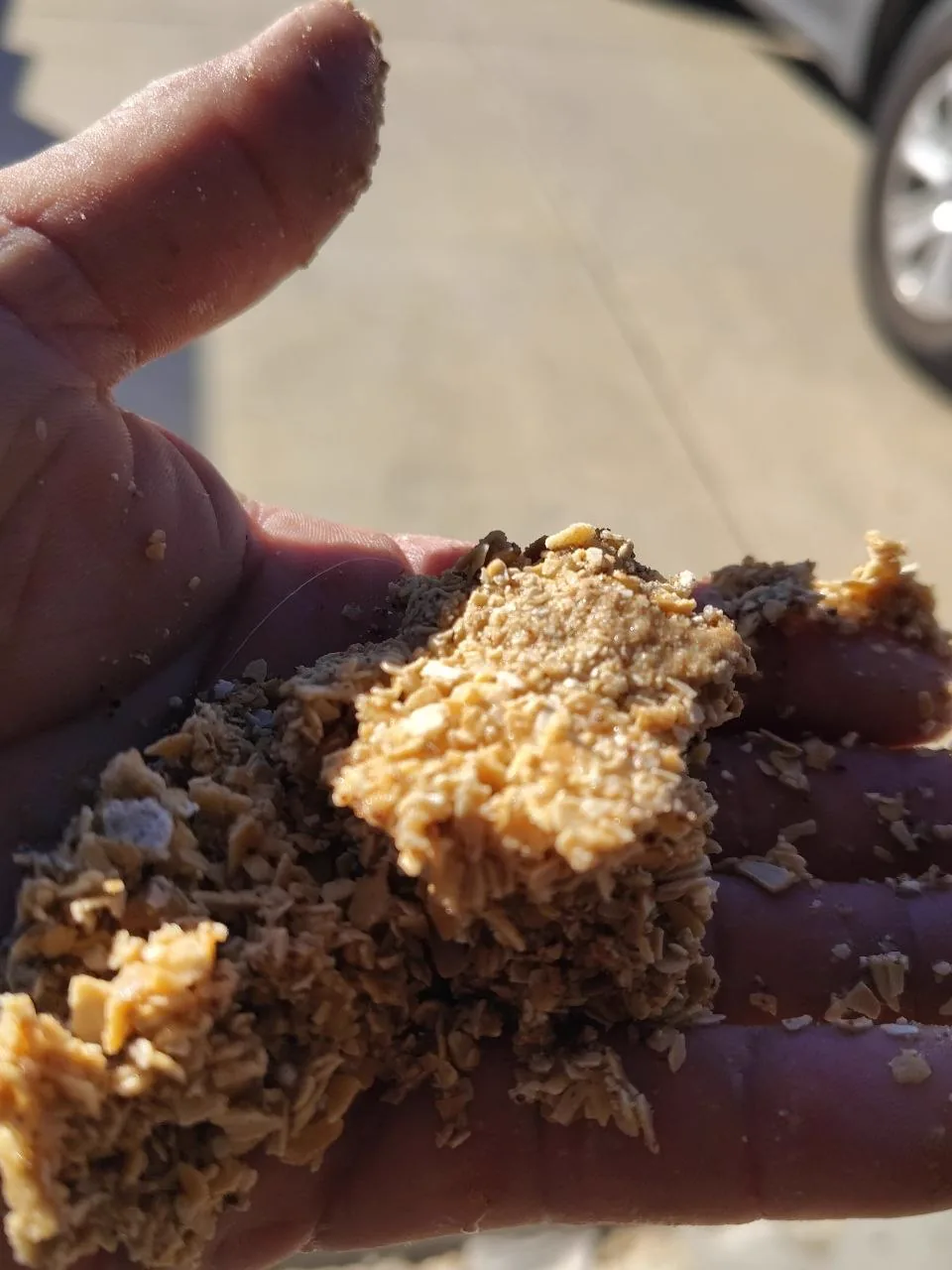
Seven years of sediment. Scale and mineral flakes from the bottom of the tank, a handful at a time.
Over seven years, minerals in the water supply settled at the bottom of the tank, and the heat baked them into a thick layer of gunk. Rheem, the water heater maker, says sediment acts like insulation at the bottom of the tank, so the heater has to run longer to heat the same water. On an electric tank like this one, the lower heating element sits near the bottom, right where the sediment piles up.
That extra strain wears parts out. Rheem warns that sediment left in the tank can lead to overheating and internal damage. In this Sanger garage, it ended with a water heater that quit heating altogether.
Why North Texas Garages Are Hard on Water Heaters
Many North Texas homes keep the water heater in the garage. That keeps a potential leak away from the living space, but an unconditioned garage brings its own problems:
- Big temperature swings. In winter the garage gets cold, and the water coming in from the street is colder too, so the heater runs longer to bring it up to temperature and loses more heat through the tank. In summer the garage traps heat for months, which is a hard place for any appliance to live.
- Humidity and condensation. When cold water comes in on a hot, humid day, condensation can form on the cold lines and the lower part of the tank. Add a small drip at a fitting, and moisture sits around the base, where it speeds up rust and corrosion.
Freezes matter too. Water lines in an unconditioned garage get no heat from the house, so they are exposed in a hard freeze. Our guide on why pipes burst in Texas covers that side of winter prep.
How Sanger Homeowners Can Protect Their Water Heaters
You don’t have to watch your water heater die young. A little preventive maintenance goes a long way toward a longer life:
- Flush the tank every year. Start here. Flushing clears out the sediment and scale before it can harden and damage the heating elements or the tank floor. Rheem recommends flushing once a year for most households, and every 6 months if you have hard water.
- Insulate the tank and pipes. An insulation blanket helps buffer the tank against garage temperature swings, and Rheem says insulation reduces standby heat loss. Use a blanket rated for your model, keep the relief valve and access panels uncovered, and put foam sleeves on the pipes, which also helps them in a freeze.
- Check the anode rod. The sacrificial anode rod attracts corrosion, so the rod gets eaten instead of your tank. Rheem says to check it yearly and replace it when it is worn or coated with calcium, and that checking it annually can add years to a water heater’s life.
- Watch for early warning signs. Keep an eye out for pooling water, rust streaks around fittings, and popping or rumbling noises. Rumbling usually means a heavy layer of sediment is sitting at the bottom of the tank.
How to Flush an Electric Water Heater Safely
A flush is simple, but an electric tank has live wiring and very hot water inside, so take it slowly:
- Turn off the power at the breaker first. Rheem’s first step is to shut off the electricity (or the gas on a gas tank) and the cold water inlet.
- Give the water time to cool so it cannot scald you.
- Connect a garden hose to the drain valve and run it to a floor drain or outside.
- Open a hot water tap in the house, then open the drain valve and let it run until the water comes out clear.
- Close the drain valve, turn the cold water back on, and let the tank fill completely before you turn the power back on. A heating element that switches on in an empty tank can burn out.
If the tank is several years old and has never been flushed, or the drain valve is crusted like the one in this Sanger garage, have a pro do the first flush. An old drain valve can stick, or start leaking once it is opened. Leave the thermostats and heating elements alone, since they sit behind panels next to live wiring.
Warning Signs Your Water Heater Needs a Look
| What you notice | What it often means | What to do |
|---|---|---|
| Popping or rumbling from the tank | Sediment at the bottom of the tank | Flush it, or have it flushed |
| Rust streaks or crust around fittings or the drain valve | Corrosion, or a slow seep | Have it checked soon |
| Water pooling around the base | A leaking fitting, valve or the tank itself | Turn off the power and the cold water, then call |
| Rust-colored hot water | Corrosion inside the tank or pipes | Have the tank and anode rod checked |
| No hot water at all (electric) | A tripped breaker, a failed element or thermostat, or a worn-out tank | Reset a tripped breaker once. If it trips again, leave it off and call |
Rheem says even a small amount of standing water or a dripping connection should be dealt with right away, because minor leaks can quickly lead to corrosion, electrical hazards or tank failure.
Repair or Replace?
Plenty of water heater problems are parts: a heating element, a thermostat, a valve. Those are often worth fixing on a sound tank. A tank that is rusting through is different, because a steel tank cannot be patched. With heavy corrosion at the base, a thick layer of sediment inside and no hot water, replacing this Sanger water heater was the right call. You can see the job photos on our Sanger water heater replacement page.
If you are weighing the same decision, our repair or replace guide walks through how to tell a tank leak from a fitting leak. It also covers what the anode rod tells you before you spend money on a repair.
Time for a Checkup?
If your water heater is starting to make strange noises or running out of hot water too fast, don’t wait for a total breakdown. The same goes for a tank that is 6 years old or more and living in a garage. Regular flushing and prompt service can save you from a messy emergency replacement.
Lantern Home Services installs and replaces water heaters for homes across Denton County and the rest of Dallas-Fort Worth. See our water heater installation page for what a replacement covers and where prices start, or browse our plumbing services.
Tell us how old your water heater is and what it is doing in the form below, and a Lantern team member will reach out within 24 hours, or call or text (817) 518-4004.
Lantern Home Services is a Flower Mound-based company serving the Dallas-Fort Worth metroplex. See our service areas for the cities we cover.
Water heater acting up in the garage?
Tell us how old your water heater is and what it is doing, like rust at the base, water on the floor or no hot water, and a Lantern team member will reach out within 24 hours to set up a visit. Prefer to talk? Call or text (817) 518-4004.
Common questions
How often should I flush my water heater?
Rheem recommends flushing once a year for most households, and every 6 months if you have hard water. Flushing drains out the sediment that settles at the bottom of the tank before it hardens. On an electric heater, turn the power off at the breaker first. If the tank is several years old and has never been flushed, have a pro do the first one, because an old drain valve can stick or start leaking.
How long does a tank water heater last?
InterNACHI's life expectancy chart for home inspectors lists a conventional water heater at 6 to 12 years, and notes that minerals in the water can shorten that. Where the tank sits and how it is cared for matter too. The Sanger tank in this post quit at 7 years old in an unconditioned garage, with a heavy load of sediment inside.
Why is my water heater popping or rumbling?
Rheem says popping and rumbling from a tank usually point to sediment building up at the bottom, and that ignoring the noise can lead to overheating or tank damage. A flush often helps if the tank is still sound. If the noise comes with rust, water around the base or less hot water than usual, have it looked at.
Should I insulate a water heater in the garage?
It can help. Rheem says insulation reduces standby heat loss, and suggests a water heater blanket rated for your model plus pre-cut sleeves for the pipes. Check your heater's manual first, and keep the relief valve and the access panels uncovered. In an unconditioned garage, sleeves on the pipes also give the lines some protection in a hard freeze.
What does the anode rod in a water heater do?
It is a metal rod inside the tank that attracts corrosion so the tank's lining does not take it. Rheem says to check it yearly and replace it when it is worn, thinned or coated with calcium, and that checking it annually can add years to the heater's life. Pulling it takes tools and care, so most homeowners leave it to a plumber.
Can a rusted water heater be repaired?
It depends on where the rust is. A drain valve, a fitting or a heating element can usually be replaced. A tank that has rusted through and leaks cannot be patched, so the fix is a new water heater. Rust flaking off the base, like on this Sanger tank, is a reason to have it checked before it starts leaking.
Sources
- DFW 100° Day Summary National Weather Service, Fort Worth/Dallas office
- InterNACHI's Standard Estimated Life Expectancy Chart for Homes InterNACHI (International Association of Certified Home Inspectors)
- How Often To Flush Your Water Heater (And How To Do It) Rheem Manufacturing Company
- How to Keep Your Tank and Tankless Water Heaters Running at Peak Performance Rheem Manufacturing Company