Replacing a failed attic supply plenum
The supply plenum on an attic air handler had split at its seams, blowing cooled air into the attic instead of the rooms. The duct board was brittle and torn, and the unit sat too tight to the framing to patch. We shifted the air handler, replaced the plenum with an insulated sheet metal one, screwed and strapped it, and sealed every joint in mastic.
The air handler in this home sits in the attic, which is common in DFW. Every room’s supply air passes through one box on top of it, the supply plenum, before it splits off into the ducts. When that box comes apart, the whole house feels it.
What was happening
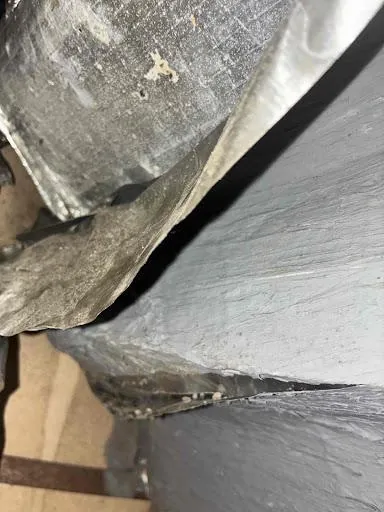
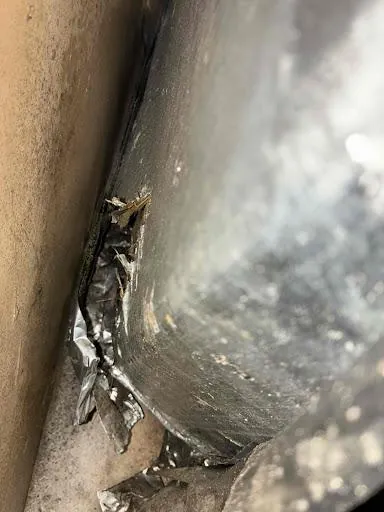
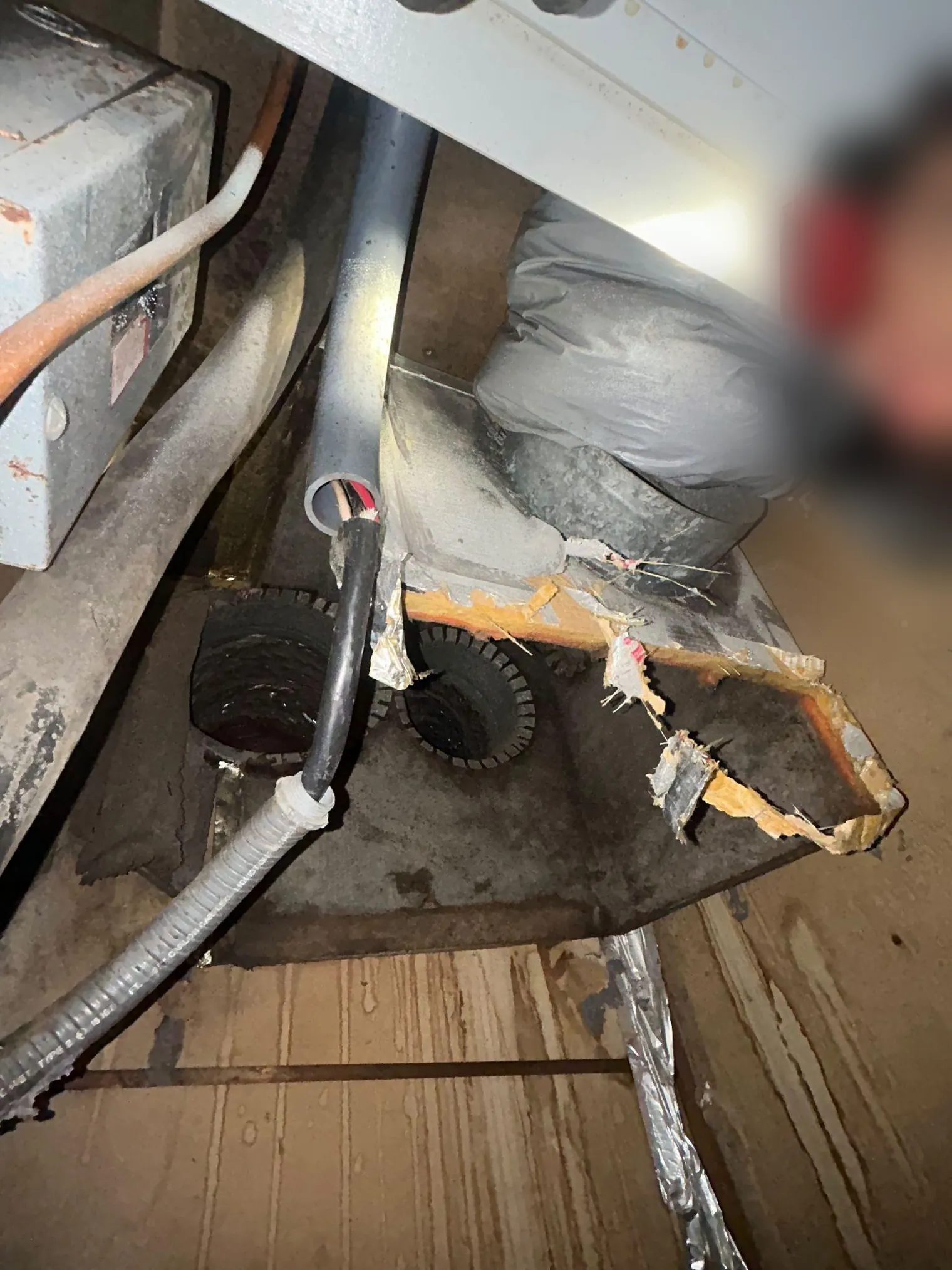
The plenum was built from fiberglass duct board. At the air handler collar, the seam had pulled completely apart, and the foil tape and mastic that once held it had dried out and split. The lower seam had torn as well, right against the wall framing and the attic decking. Cooled air was blowing into the attic instead of down to the rooms.
The plenum is the worst place for a leak. It sits where the air leaves the blower, so it loses air before any room gets its share.
Why it could not be patched
The unit sat flush against the framing and the floor decking. There was no room to reach the back, bottom and side flanges with sheet metal tools, and the duct board itself was brittle and shredding away from the take-offs.
The repair
- Disconnect and shift the air handler. Power and control wiring, the overflow float switch and the condensate line were disconnected, and the unit was moved on its platform to open up the whole collar.
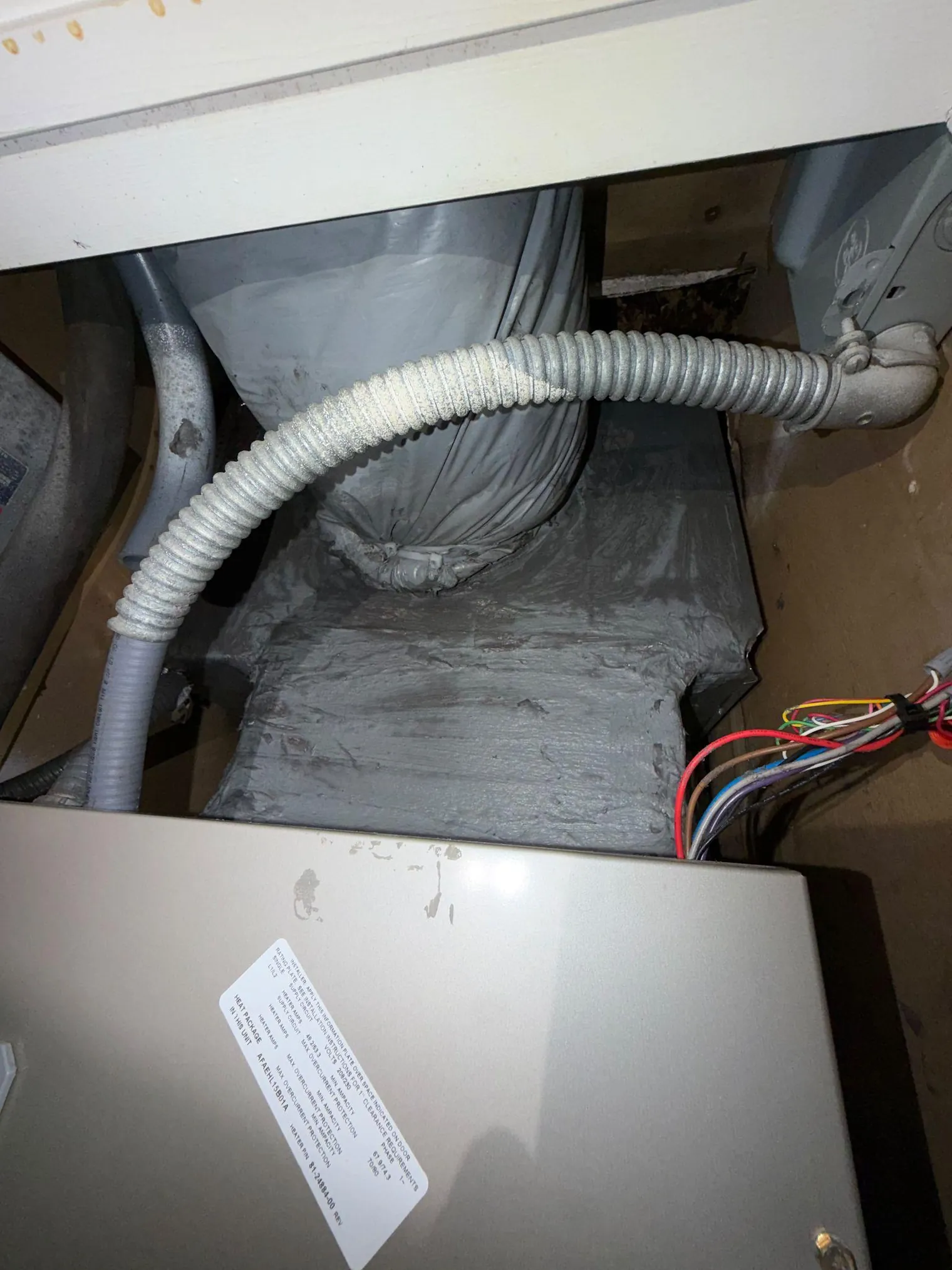
- Replace the plenum. The duct board came out. In its place went an insulated 26-gauge sheet metal supply plenum with new start collars.
- Fasten it. The new plenum was screwed to the air handler’s discharge flange every 4 inches, so the joint cannot pull apart under blower pressure.
- Support it. The plenum and its take-offs were hung on their own straps, so their weight no longer hangs on the air handler.
- Seal it. Every seam, collar and flange was wrapped in fiberglass mesh and coated in a continuous layer of duct mastic.
The system was then reconnected and static pressure checked, with the supply air going into the ducts again rather than into the attic.
Read the full story and the warning signs in why a leaking attic supply plenum needs more than tape, or see the HVAC services Lantern offers.