hvac
Leaking Attic Supply Plenum in Fort Worth: Why Tape Won't Hold It
Published by Lantern Home Services
Short answer
The supply plenum is the box on your air handler that feeds every supply duct. When its seams pull apart in the attic, cooled air blows into the attic instead of your rooms, so the system runs longer and the far rooms stay warm. Tape will not hold a split joint. A lasting fix is a plenum, usually sheet metal, that is screwed on, supported on its own and sealed with mastic.
A Fort Worth summer afternoon, the thermostat set where it always is, and the AC running without a break. The back bedroom is still warm, and the electric bill is higher than last year. It is easy to assume the air conditioner is failing. Sometimes the equipment is fine and the cooled air is simply going somewhere else: into the attic, through a supply plenum that has come apart.
This post walks through a recent Lantern job where that happened, the signs to watch for, and why a roll of tape is not the fix.
What a supply plenum does
In most DFW homes with an attic system, the air handler pushes cooled air into a box attached to its outlet. That box is the supply plenum. From there, the air splits into the duct runs that feed each room.
Because it sits right where the air leaves the blower, the plenum carries the highest pressure on the supply side. It also sits in one of the hottest places in the house. A North Texas attic in summer runs far hotter than the outdoor air, while the plenum carries the coldest air the system makes. Years of that heat and cold, plus vibration from the blower and the weight of the ducts pulling on it, wear the joints loose.
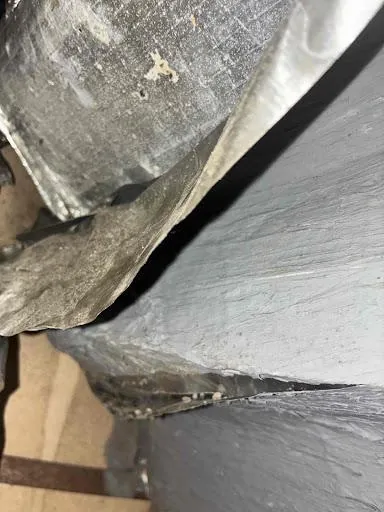
Before: the seam at the air handler collar had split open, and the old tape and mastic had torn apart.
What we found in this attic
On a recent job in Fort Worth, the plenum was built from fiberglass duct board. The seam at the air handler collar had separated completely. The lower seam had torn as well, and it sat tight against the wall framing and the attic decking. Cooled air was blowing under the decking and into the attic.
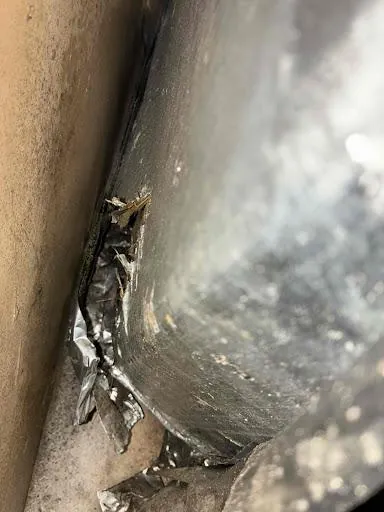
Before: the lower seam tore right against the framing, where no patch could reach.
Why supply plenums come apart
When we look at failed plenum joints, the same three causes keep showing up.
- Tape and mastic that have aged out. Adhesive tapes and thin coats of mastic dry out and crack after years of attic heat on the outside and cold air on the inside.
- Duct board that has lost its strength. Fiberglass duct board is inexpensive and widely used. It is far less stiff than sheet metal, and over time the weight of the duct take-offs pulls its edges away from the metal collars until they tear.
- No screws and no support. A joint held only by tape or mastic has nothing mechanical keeping it together. Without sheet metal screws at the flange and straps holding the plenum up, gravity and blower pressure slowly pull it apart.
5 signs your supply plenum may be leaking
Because the air handler is out of sight in the attic, a failed plenum can go unnoticed for months. Watch for these:
- Weak airflow in the far rooms. Bedrooms at the ends of the house get less air, because some of it escapes before it reaches their ducts.
- Long runtimes on hot afternoons. The system runs and runs without reaching the setpoint.
- A higher electric bill. You are paying to cool the attic. ENERGY STAR says that in a typical house, about 20 to 30 percent of the air moving through the ducts is lost to leaks, holes and poorly connected ducts.
- Dust and drafts indoors. When supply air blows out into the attic, the house can pull attic air back in through gaps around ceiling vents, can lights and other openings. Dust streaks around those spots are a clue.
- A whooshing sound near the attic access. A large tear on the supply side can be loud enough to hear from the hallway or the attic stairs.
If any of these sound familiar, have someone look at the plenum and the first few feet of each duct, where the air pressure is highest.
Why tape over the split will not hold
The natural instinct is to put foil tape or spray foam over the split. Tape and mastic seal a joint. They do not hold one together. ENERGY STAR recommends mastic or metal tape for sealing duct leaks and says never to use plain duct tape, because it does not last. But when a joint has already pulled apart, or the duct board around it is tearing, sealing the surface does nothing about the force pulling it open.
| Repair | What holds the joint together | How it holds up in a DFW attic |
|---|---|---|
| Tape alone over the split | Nothing but the adhesive | No tape holds a joint that has already pulled apart |
| A smear of mastic over the gap | Nothing behind the mastic | Cracks once the duct sags or flexes again |
| New metal plenum, screwed, strapped and sealed | Screws at the flange and straps to the framing | Built to stay put, with mastic sealing every seam |
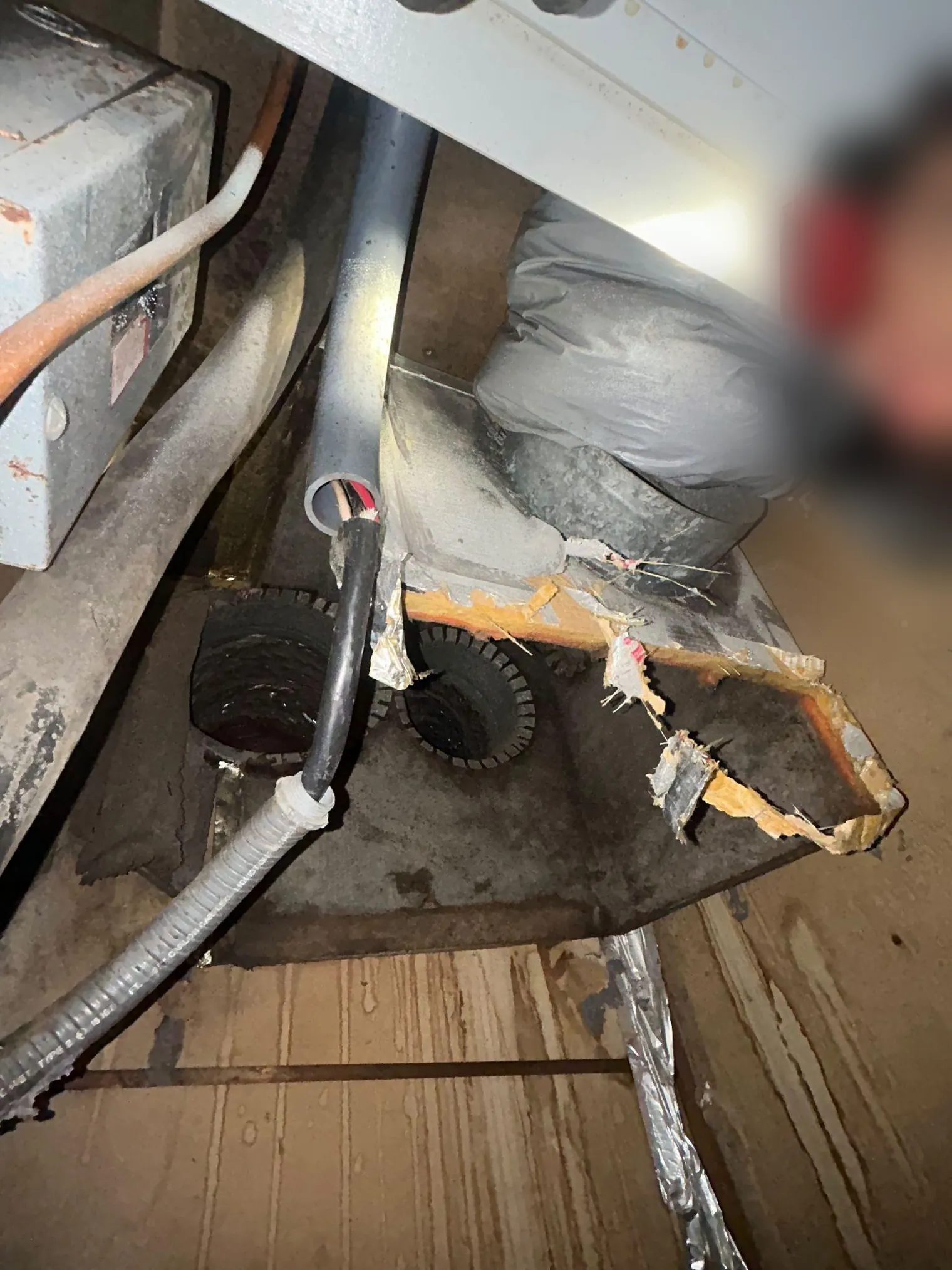
During: the old duct board coming out, brittle and torn away from the take-offs.
How we rebuilt the supply plenum
On this job, a proper repair meant moving the air handler. It sat flush against the wall framing and floor decking, so there was no room to reach the back, bottom and side flanges with sheet metal tools.
- Disconnect and shift the air handler. We disconnected the power and control wiring, the overflow float switch and the condensate line. Then we moved the unit on its platform to open up the whole collar.
- Build in a new metal plenum. The duct board came out. In its place went an insulated 26-gauge sheet metal supply plenum with new start collars.
- Screw it on. The plenum was fastened to the air handler’s discharge flange with self-tapping screws every 4 inches, so the joint cannot pull apart under blower load.
- Hang it on its own. The plenum and its take-offs were strapped and supported separately, so their weight no longer pulls on the air handler.
- Seal every joint. Each seam, collar and flange was wrapped in fiberglass mesh tape and coated with a continuous layer of UL 181A-M listed duct mastic.
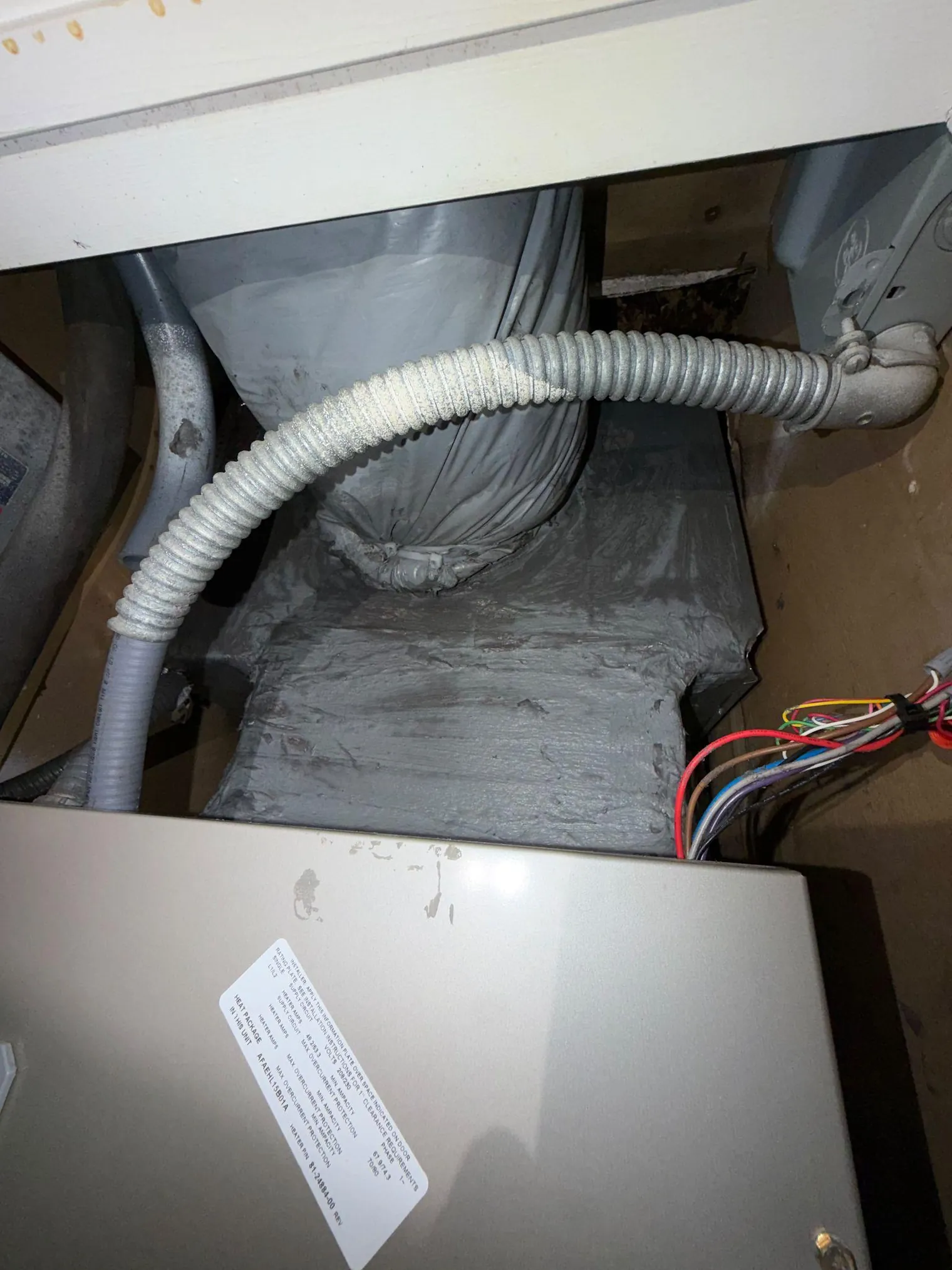
After: the new metal plenum, screwed to the air handler, strapped, and sealed in mastic.
What changed after the repair
After the system was reconnected, static pressure was checked and read where it should for this system. With the plenum sealed, the cooled air goes to the rooms instead of the attic. That means shorter cooling cycles on hot days, less wear on the equipment, and far less attic air pulled down into the house through the ceiling.
What plenum repair looks like with Lantern
Plenum work depends on what is in your attic: how the plenum was built, what has failed, and how much room there is around the air handler. Lantern quotes it in writing after a look in the attic, before any work starts. If the problem turns out to be a part in the system instead, our AC repair page lists starting prices for the common ones.
If your AC is running but the house is not keeping up, our post on why an AC runs but does not cool covers the other usual causes. The HVAC services page shows everything we work on, and our Fort Worth HVAC page covers the area.
Tell us what you are noticing in the form below, and a Lantern team member will reach out within 24 hours.
Lantern Home Services is a Flower Mound-based company serving the Dallas-Fort Worth metroplex. See our service areas for the cities we cover.
Rooms not cooling, or a whoosh from the attic?
Tell us what you are noticing and where your air handler sits, and a Lantern team member will reach out within 24 hours to set up a look in the attic. Prefer to talk? Call or text (817) 518-4004.
Common questions
What is a supply plenum?
It is the box attached to the outlet of your air handler or furnace. Conditioned air leaves the blower, enters the plenum, and splits off into the duct runs that feed each room. Because every room's air passes through it first, a leak there costs more than a leak at the end of one duct.
Can I just tape a leaking plenum?
Mastic or metal tape can seal a small gap on a sound joint, and ENERGY STAR says never to use plain duct tape. No tape can hold together a joint that has pulled apart or a duct board box that is tearing. That needs fasteners, support and new material where the old has failed.
Does fixing a plenum mean the air handler has to come out?
Not always. It depends on how much room there is around the unit. If the air handler sits tight against framing or decking, as on the job described above, it has to be disconnected and shifted so the whole collar can be fastened and sealed. With good clearance, the work can happen in place.
How do I know if the ducts in my attic are leaking?
Look for weak airflow in the rooms farthest from the air handler, long runtimes on hot afternoons, a higher bill with no change in habits, dust streaks around ceiling vents and lights, or a whooshing sound near the attic access. A look in the attic at the plenum and the first few feet of each duct usually settles it.
Sources
- Duct Sealing ENERGY STAR (U.S. EPA and DOE)